Key Takeaways
- Florida condos three or more habitable stories must complete a Structural Integrity Reserve Study (SIRS), and associations were required to begin funding those reserves per the study starting January 1, 2026.
- Milestone inspections under Fla. Stat. § 553.899 hit at 30 years (as early as 25 near the coast where the local jurisdiction requires it), then every 10 years.
- The result: a wave of special assessments that show up — or don't — on estoppel certificates.
- An estoppel tells you what's owed today. It won't tell you about the $40,000 assessment the board votes on next month.
- Buyers inherit association obligations at closing, which makes condo diligence a title problem, not just a realtor problem.
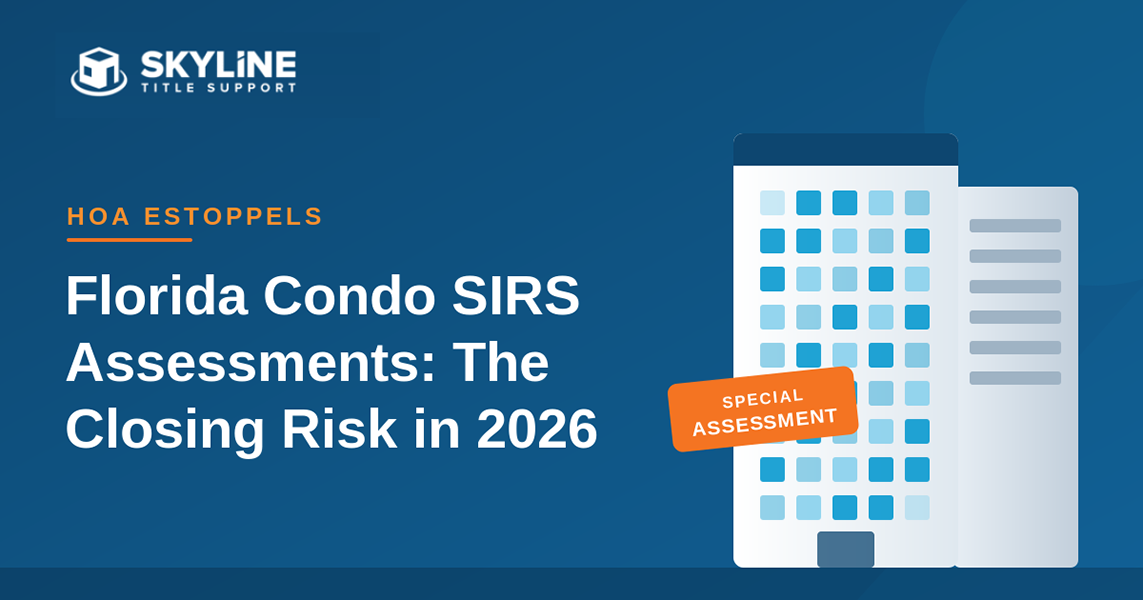
A clean title search on a Florida condo means less than it used to. The lien landscape hasn't changed much — but the money has. Post-Surfside structural reform has pushed thousands of associations into inspections, reserve studies, and repair budgets they'd deferred for decades, and the bill is landing on unit owners as special assessments.
For title agents, settlement attorneys, and lenders, that creates a specific and uncomfortable problem: the document you rely on to price association obligations at closing is a snapshot, and the risk is a moving target. Here's how to work the gap.
What Changed: Milestone Inspections and SIRS in Plain English
Two separate requirements get conflated constantly, so it's worth separating them:
The milestone inspection (Fla. Stat. § 553.899) is a structural safety inspection for condo and co-op buildings three stories or higher. It's triggered at 30 years of age, and local enforcement agencies can require it as early as 25 years based on factors like coastal proximity. It repeats every 10 years. A Phase 1 inspection can escalate to a more invasive Phase 2 if substantial deterioration is found.
The SIRS (Fla. Stat. § 718.112(2)(g)) is a financial study, not a safety inspection. It prices out the reserve funding needed for the building's structural components on a 10-year cycle. The statutory completion deadline was extended to December 31, 2025.
The components a SIRS must price
- Roof
- Load-bearing walls and primary structural members
- Fire protection systems
- Plumbing
- Electrical systems
- Waterproofing and exterior painting
- Windows and exterior doors
- Any other item with a deferred maintenance or replacement cost exceeding $25,000 that affects the above
HB 913, effective July 1, 2025, refined the framework: SIRS reports must include a "baseline" funding plan keeping the structural reserve balance above zero, associations must retain milestone and SIRS reports for at least 15 years, and boards gained some flexibility — including the ability to use a loan or line of credit to meet reserve obligations, and to pause reserve funding for up to two consecutive budget years to redirect money toward milestone-identified repairs (subject to a unit owner vote).
The critical shift: associations can no longer simply vote to waive the structural reserves a SIRS identifies. Deferral was the old release valve. It's closed.
Why This Lands on Your Closing Table
When an association can't waive reserves and a milestone inspection has just handed it a repair scope, it has three realistic options: raise regular assessments, levy a special assessment, or borrow. All three change what a buyer is walking into — and two of them create dollar amounts that someone at the closing table has to allocate.
Under Fla. Stat. § 718.503, pending assessments are disclosure items, and the estoppel certificate is where they're supposed to surface. But estoppels are point-in-time documents. A board that has an inspection report in hand and a vote scheduled for next month may have nothing to report today.
Risk Warning
In Florida, the buyer generally inherits the seller's association obligations the moment the deed is recorded. An estoppel that says "$0 due" is not a statement that no assessment is coming — only that none has been levied. That distinction has produced a lot of angry post-closing phone calls.
Pending vs. Levied: The Question That Decides Who Pays
Most condo assessment disputes come down to timing. Contract language usually allocates based on when the assessment was levied or certified — not when it's due or paid. Know which side of the line your deal sits on.
| Status | What it means | Closing impact |
|---|
| Contemplated | Inspection or SIRS shows a shortfall; no board action yet. | Invisible on the estoppel. Only surfaces through minutes and budgets. |
| Pending | Board has noticed or scheduled a vote. | Disclosable; negotiate allocation in the contract now. |
| Levied | Board has voted and approved the assessment. | Appears on the estoppel; typically seller's obligation for installments due pre-closing. |
| Delinquent | Levied and unpaid. | Lienable. Must be cleared or escrowed at closing. |
A Condo Diligence Workflow That Actually Catches Assessments
The fix isn't a better estoppel — it's looking past the estoppel. This sequence catches the assessments that estoppels miss:
Condo Assessment Diligence
- Order the estoppel early. Establish the baseline of what's actually owed and confirm the association's turnaround clock has started.
- Age the building. Three-plus stories and near 25 or 30 years old? Assume a milestone inspection and SIRS are in play and ask directly.
- Request the reports and minutes. The milestone report, the SIRS, the current budget, and 12 months of board minutes. This is where a coming assessment is visible before it's levied.
- Check the municipal file. Open permits or code enforcement activity on the building often trace back to milestone repairs — and can carry their own liens.
- Paper the allocation. Get pending-assessment responsibility in writing in the contract or an addendum. Escrow where the number isn't final.
Pro Tip
Board meeting minutes are the highest-yield document in condo diligence and the one nobody orders. An assessment is usually discussed for months before it's levied — and only the minutes show that.
Steps three and four are exactly where deals die on timing. A thorough HOA and condo estoppel order paired with a municipal lien search gives you both halves of the picture — the association's ledger and the building's public record — without your team chasing a property manager for two weeks.
Frequently Asked Questions
Does an estoppel certificate disclose future special assessments?
Not reliably. An estoppel reports amounts owed and assessments that have been levied or are pending as of its issue date. An assessment that a board is contemplating — but hasn't noticed or voted on — generally will not appear.
Which Florida condos need a SIRS?
Residential condominium associations with buildings of three or more habitable stories, on a 10-year cycle. The statutory completion deadline was extended to December 31, 2025, and reserve funding per the study was required to begin January 1, 2026.
Can an association still waive its reserves?
Not for the structural components a SIRS identifies. That's the core change. HB 913 added flexibility — including loans, lines of credit, and a limited pause to fund milestone repairs — but not a return to blanket waivers.
Who pays a special assessment levied before closing?
It depends on contract language, which typically keys off the levy or certification date. Installments due before closing are usually the seller's; the balance often shifts to the buyer. Never assume — read the contract and confirm on the estoppel.
Why do lenders care about milestone and SIRS status?
Secondary-market condo project eligibility can be affected by deferred maintenance, unfunded reserves, and significant structural findings. A project with problems can become difficult to finance, which affects marketability well beyond one closing.
The Bottom Line
Florida's structural reforms did what they were designed to do: force associations to confront real numbers. The side effect is that condo closings now carry a financial risk that lives outside the title search and outside the estoppel's four corners.
Title professionals who age the building, pull the reports and the minutes, and paper the allocation early will close these deals. The ones who treat the estoppel as the whole story will keep getting surprised.
Want condo estoppels ordered, chased, and returned without tying up your team? Request a quote for Skyline's HOA and condo estoppel service and get the association's full picture before it becomes a closing-day problem.