Key Takeaways
- A tax certificate is a lien the county sells to an investor when property taxes go unpaid — and it does not appear on a standard title search, which reads recorded instruments, not the tax roll.
- In Florida, taxes become delinquent on April 1 and certificates are sold on or before June 1. The lien attaches to the property, not the former owner, so it follows the parcel straight through your closing.
- A certificate holder can force a tax deed sale once the certificate is two years old. A deal that looks clean can be weeks from the auction block.
- Tax obligations ride the same bill as CDD, special, and other non-ad valorem assessments, so one unpaid line can hide several debts.
- The fix is treating current tax and certificate status as its own verification step — never an assumption that the title search already covered it.
A title search can come back spotless and the property can still be two years from the courthouse steps. That is the uncomfortable truth about Florida tax certificates: they are liens, they have priority over almost everything else on title, and they live on the tax roll rather than in the official records most searches are built to read. For title agents, real estate attorneys, and lenders, an unexamined tax certificate is one of the quietest ways a "clean" file turns into a post-closing claim.
This is not a rare edge case. Every delinquent parcel in the state generates one, and they stack year over year. Below are the red flags that most often slip past a closing, and how to catch them first.
Why unpaid taxes don't show up where you expect
A standard title search surfaces recorded instruments: deeds, mortgages, judgments, lis pendens, easements. A tax certificate is none of those. When an owner misses the deadline, the county tax collector sells a certificate for the delinquent amount to an investor, who pays the county and earns interest until the owner redeems. The debt lives with the tax collector, not necessarily mirrored as a recorded lien in the clerk's official records.
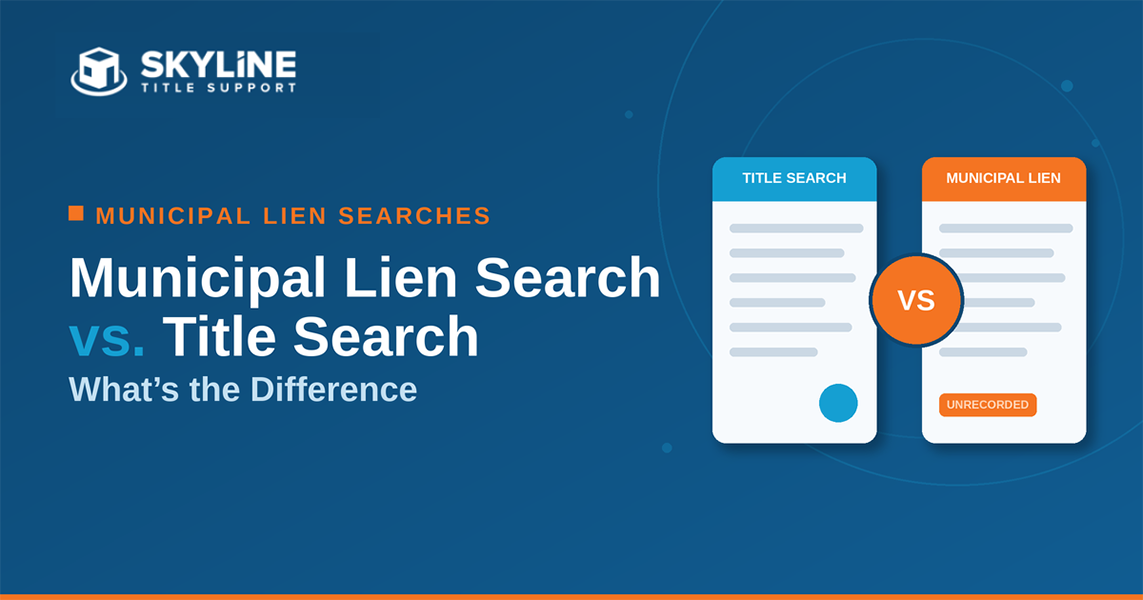
That gap is exactly why a title search alone is not enough. It is also why a dedicated municipal lien search exists as a separate product — to catch the obligations that sit off the recorded record. If you have ever wondered how a municipal lien search differs from a title search, tax certificates are the textbook example of what one catches and the other does not.
A clean title search tells you the chain of title is good. It does not tell you the county is weeks from selling the roof over your closing.
How a Florida tax certificate works, in 30 seconds
You do not need to be a tax-deed investor to spot the risk, but a few mechanics make the red flags obvious. Under Chapter 197 of the Florida Statutes, property taxes become delinquent on April 1, and the tax collector must hold the certificate sale on or before June 1 for the prior year's unpaid taxes. Bidding opens at 18% and is bid downward; the winning investor holds a lien that earns that rate, with a mandatory minimum of 5% on redemption unless the bid was zero.
Two dates decide how dangerous a certificate is. Once a certificate is two years old — measured from April 1 of the year it was issued — the holder can apply for a tax deed and push the property to sale. If no one ever applies, the certificate becomes void seven years after issuance. The window that matters to your closing is that two-year mark.
Compliance Risk
A certificate that has quietly aged past two years means any holder can file for a tax deed at will. If that application is already pending when you close, the buyer can inherit a property with an active foreclosure-style process running against it. Verify the age and status of every outstanding certificate — not just the current-year balance.
Six tax certificate red flags to catch before closing
1. A current-year "paid" stamp hiding a prior-year balance
The most common miss. The current tax bill shows paid, everyone relaxes, and a certificate from two years ago is still sitting open. Current-year status tells you nothing about prior years. Always confirm the full delinquent history, certificate by certificate, before you clear taxes as an exception.
2. Non-ad valorem assessments folded into the same bill
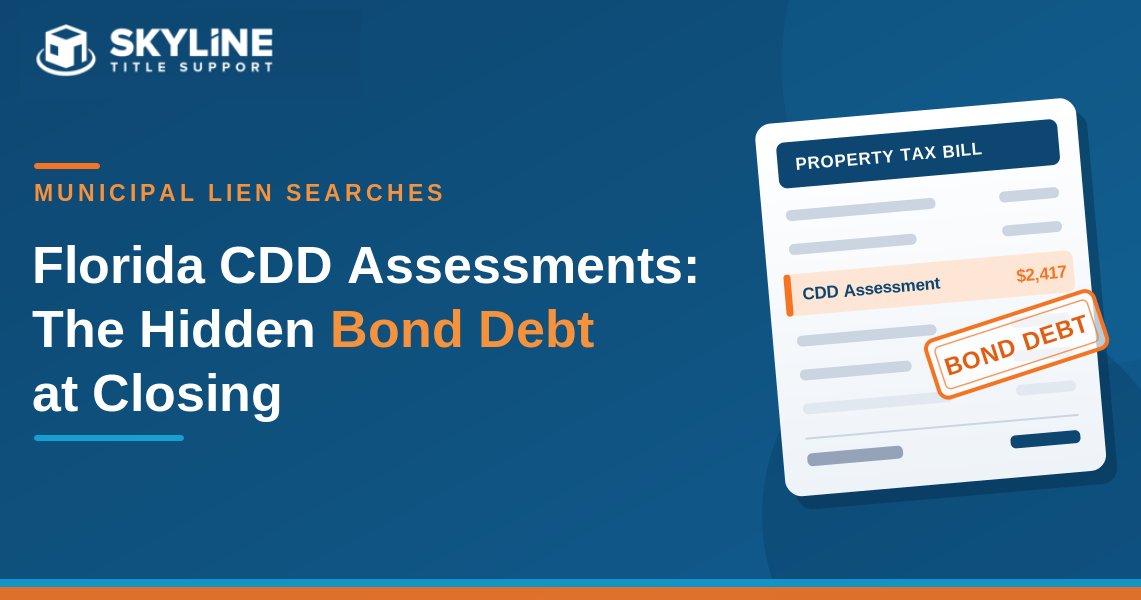
Florida tax bills carry more than property taxes. Community development district (CDD) bonds, special assessments, solid-waste and lighting charges, and PACE obligations all ride the same bill and roll into the certificate's face amount when unpaid. A single delinquent line can represent several debts. These CDD assessments that ride the same tax bill are a frequent source of surprise numbers at the table.
3. A certificate that is already two years old
If an outstanding certificate has crossed the two-year line, treat the file as time-sensitive. The holder does not have to wait, warn, or negotiate — they can apply for a tax deed. The redemption amount also grows with interest and fees the longer it sits, so the payoff you quote today may be stale next week.
4. Stacked certificates across multiple tax years
Delinquency rarely stops at one year. When an owner falls behind, each subsequent year can generate its own certificate, often held by different investors at different interest rates. Redeeming one does not clear the others. Count the certificates, identify every holder, and total the full redemption — a partial payoff leaves live liens on the parcel.
5. A redemption figure quoted at the discounted amount
Florida offers early-payment discounts on current taxes, but delinquent certificates do not work that way. A quote that looks suspiciously low may reflect a discount that no longer applies or may omit the mandatory 5% minimum interest and the collector's fees. Underquote the payoff and the shortage surfaces after closing, when it is your problem to resolve.
Pro Tip
Always request the redemption figure as a certified, dated payoff good through your projected closing date — not a screen estimate. Tax certificate payoffs accrue interest daily, and the collector honors the official figure, not the number someone read off a portal last Tuesday.
6. Parcel-ID or legal-description mismatches on split or new parcels
Recently split, combined, or newly platted parcels are a classic blind spot. A certificate may still be indexed under the old parcel ID or a parent folio while the deed describes the new one. If you search only the current parcel number, the delinquent history on the predecessor parcel can vanish from view. Reconcile the folio history whenever the legal description has changed in the last few years.
Quick reference: the red flag, the risk, and the fix
| Red flag | Why it survives closing | How to catch it |
|---|
| Prior-year certificate behind a paid current bill | Current-year status looks clean | Pull the full delinquent history, not just this year |
| Non-ad valorem assessments in the bill | Hidden inside one tax line | Break out CDD, special, and PACE charges separately |
| Certificate older than two years | Tax deed can be filed at any time | Check issuance date and application status on every certificate |
| Multiple stacked certificates | Redeeming one leaves the rest live | Identify every year and holder; total the full payoff |
| Discounted or estimated payoff | Misses the 5% floor and daily interest | Get a certified payoff dated through closing |
| Parcel-ID mismatch on split parcels | Debt indexed under the old folio | Reconcile folio history after any legal change |
How to take tax exposure off the table before you close
Every red flag above shares one fix: tax status deserves its own verification step against the tax collector's current records, not an assumption rolled into the title work. The workflow is simple — order current tax and certificate information early, confirm the full multi-year delinquent history by parcel, break out any non-ad valorem assessments, and pull a certified payoff dated through closing. Built into the search order instead of bolted on at the end, ordering current tax certificate information turns these into routine exceptions you clear in advance rather than post-closing claims you defend.
Frequently Asked Questions
Does a tax certificate show up on a standard title search?
Usually not in full. A title search reads recorded instruments in the clerk's official records, while tax certificates are tracked by the county tax collector on the tax roll. That is why a municipal lien or dedicated tax search is used to surface them.
How long before a tax certificate can lead to losing the property?
In Florida, the certificate holder can apply for a tax deed once the certificate is two years old, measured from April 1 of the year it was issued. From there the property can move to a tax deed sale, so a two-year-old certificate is a time-sensitive flag.
Do tax certificates ever expire on their own?
Yes. Under Florida law a certificate becomes void seven years after issuance if no tax deed has been applied for and no other proceeding of record exists. But you should never rely on expiration to clear a lien at a live closing.
Why is the payoff higher than the original tax amount?
A certificate earns interest — up to 18%, with a mandatory 5% minimum on redemption unless the bid was zero — plus penalties and the collector's fees. Interest accrues over time, so the certified payoff grows the longer the certificate stays unredeemed.
Tax certificates are not exotic, but they are easy to underestimate, and the cost of missing one lands squarely on the closing agent. If you want tax and certificate status verified as a clean, documented exception before your next file reaches the table, request a quote from Skyline Title Support and we will handle the search so nothing follows the parcel through your closing.